District 6 is expected to receive national attention and funding during the Congressional midterm elections. After the U.S. Supreme Court cleared the way for California to use a new congressional map, the 2026 election is set to use Proposition 50 boundaries.
High-profile candidates have entered a competitive race for the left-leaning California 6th Congressional District, which combines Sacramento, North Highlands and Roseville. Democratic Congressman Ami Bera chose to run in District 3 rather than remain in District 6, leaving the seat open. Democratic challengers include former California State Senator Richard Pan and Sacramento County District Attorney Thien Ho.
With Democrats holding a registration advantage in the new geographic district, Republicans will face significant headwinds. Under California’s top-two primary system, all candidates appear on the same ballot, and the top two winners advance to the general election regardless of party.
What happened with redistricting?
With California voters approving Proposition 50 in the Nov. 4, 2025 election, the state’s congressional maps were redrawn, creating five new seats and reshaping several competitive districts.
The measure replaced the maps drawn by the independent California Citizens Redistricting Commission with new districts drawn by the Democrat-controlled state legislature. These districts will apply to the 2026, 2028 and 2030 elections before the independent commission resumes control after the 2030 census.
The new map shifts the political balance in several regions, including Sacramento, the Inland Empire and Los Angeles. Analysts find the changes would likely increase the number of Democratic seats.
Supporters argue that the measure counters partisan redistricting in other states, while opponents say it weakens California’s independent redistricting system by allowing politicians to redraw district lines.
Who’s in the field?
Congressman Kevin Kiley, who currently represents California’s 3rd Congressional District and previously served in the California State Assembly, is considered a leading contender due to his incumbency, fundraising power and name recognition in Placer County. Despite favorable polls in the 5th Congressional District, Kiley decided to run in the new 6th District to avoid competition with longtime representative Republican Tom McClintock. Recently, Kiley changed his political party to independent, reflecting a desire to shift the paradigm and reduce partisanship in politics. Signaling an approach to build bridges and chart a different course during his tenure, Kiley was the only member of his then Republican party to come to work and try to end the longest government shutdown in U.S. history in October 2025.
Early attention has centered on Kiley, Pan and Ho. Ho currently reports the most cash on hand, while Pan has raised substantial funds and built a strong donor network. The Federal Election Commission shows lower fundraising numbers for Republican challengers, though Kiley is expected to become the most-funded candidate. Kiley reported $2 million at the end of last year, according to the latest federal filings. He also retains one-third of his voter constituents in the newly drawn district.
A Democratic poll conducted in February 2026 by Democratic firm Normington, Petts & Associates suggested that name recognition, endorsements and fundraising will likely shift throughout the race. Pan has received support from medical organizations, Sacramento Democratic committees and Asian American political groups. Ho has been backed by law enforcement organizations, Democratic committees and Vietnamese-American political networks.
The Gazette interviewed multiple congressional candidates.
Kevin Kiley
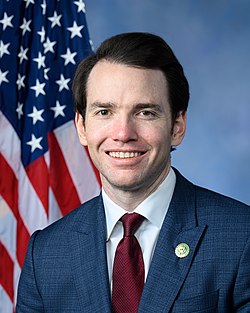
Granite Bay High School alum Kiley focuses on affordability, public safety and the unhoused, emphasizing his work as the former Chair of the Congressional House Education Committee for K-12. He recently secured a $22.5 million grant for regional road infrastructure improvements, law enforcement assistance and resolved over 5,000 constituent cases.
In opposition to Proposition 50, he argued that gerrymandering deters democracy and should be eliminated nationwide. He supports national redistricting standards to promote fair maps and independent redistricting commissions in every state.
“I don’t like that they did this in Texas. I don’t like that we did it in California. Several other states are now engaging in gerrymandering to make their district lines less fair. We need to just put an end to it everywhere,” Kiley said.
Kiley introduced a bill in the House to ban mid-decade redistricting and repeatedly urged Speaker Mike Johnson to bring it to a vote. With the midterms in November, there is a historically high likelihood that the House will switch to the other political party with Democratic leadership. A recent Reuters poll finds the unpopularity of a GOP Congress and the Trump administration has risen, as reflected by a president’s approval rating at 39%.
“Partisanship has become a really big problem for the country, and there’s just too much political division in Washington DC, too much gridlock, not enough willingness to define common ground,” Kiley said. “If that means challenging the establishment or if it means going against party leaders, whether in Sacramento or Washington DC, then that’s what I’ll do, because I answer to my constituents.”
Thien Ho
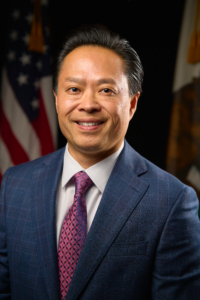
Thien Ho, an elected official representing 60% of the district, was born in Vietnam and escaped by fishing boat to a refugee camp after the fall of South Vietnam before immigrating to the United States.
“America is the land of the free and the home of the brave. My family fled a dictatorship. I never thought that I would see the rise of one in this country,” Ho said. “I support Proposition 50 because it responds to efforts by Donald Trump, Texas and other parts of the country to redraw districts and erode democracy.”
Ho emphasized that California differs from Texas because voters approved the change rather than the legislature alone, and that the district reflects diverse communities across Sacramento, Yolo and Placer Counties.
“I’m running to defend democracy, ensure affordability for working families, and make sure everyone is safe, including immigrants. I’ve spent my career fighting in the courtroom for the voiceless, vulnerable and victims,” Ho said. “This isn’t just about the future—it’s about now and ensuring the promise of America is kept for our children.”
In support of immigration reform, Ho criticized the immigration raids as inhumane and illegal, particularly the deportation of undocumented domestic violence victims presumably protected by the 4th Amendment. As the only immigrant and refugee running for office, his priority is public safety, rule of law and constitutional rights.
“The three biggest issues are the affordability crisis, defending democracy and public safety,” Ho said. “I want the promise that America is accessible to everybody. I aim to protect democracy from erosion on immigration, tariffs and free elections. I want to promote public safety: fight fentanyl poisoning and addiction, address the homeless crisis and ensure the safety of all communities, including the undocumented.”
Across party lines, Thien Ho addressed the unhoused crisis in Sacramento, collaborated with the city council and sheriff’s office and community-based organizations to protect public safety and created Sacramento’s first Human Trafficking Task Force.
Richard Pan
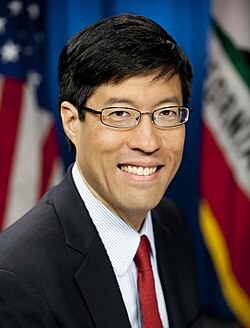
Pan said the new district reflects the diverse communities he has served over a decade as a public servant.
“I support Proposition 50 to establish fairness because legislators shouldn’t be drawing their own lines for their own districts for a political advantage not reflective of the voters of their state. Many of those states changed the maps by legislature without voter input,” Pan said.
In the state legislature, Pan reduced the uninsured rate by two-thirds, lowered insulin costs to $11 and funded legal assistance for immigrants. After the Disneyland measles outbreak, he helped secure health care for uninsured children and led efforts to eliminate vaccine exemptions, authoring a law preventing excessive exemptions for schools with vaccination rates below 95%.
“I’ve represented over 60% of the district when I was in the state legislature for over a decade, so I’m very familiar with these communities,” Pan said. “I’m proud to run in a place where I grew up, raised my family and have a small business.”
Pan opposes the federal healthcare policies by the Trump administration and U.S. Secretary of Health and Human Services Robert F. Kennedy Jr. that would reduce Medicaid access, affecting children and seniors’ care and raise insurance costs for middle-class families as Covered California tax credits expire. Under President Trump’s megabill, the Congressional Budget Office predicts about 10 million Americans will lose coverage under Medicaid and the Affordable Care Act.
Affordability is Pan’s top issue and addressing immigration policies that raise fear among racially profiled immigrants, which limits access to work, education and emergency medical care.
Drawing from his experience on California’s Health Care Affordability Board and serving as past-Chair of the California Senate Budget Subcommittee on Health and Human Services, he supports protecting Medicare and Medicaid, extending middle-class tax credits for Covered California health coverage and keeping government out of medical decisions made by patients and their doctors, including reproductive care.
“I believe in facing the facts right and following the science,” Pan said.